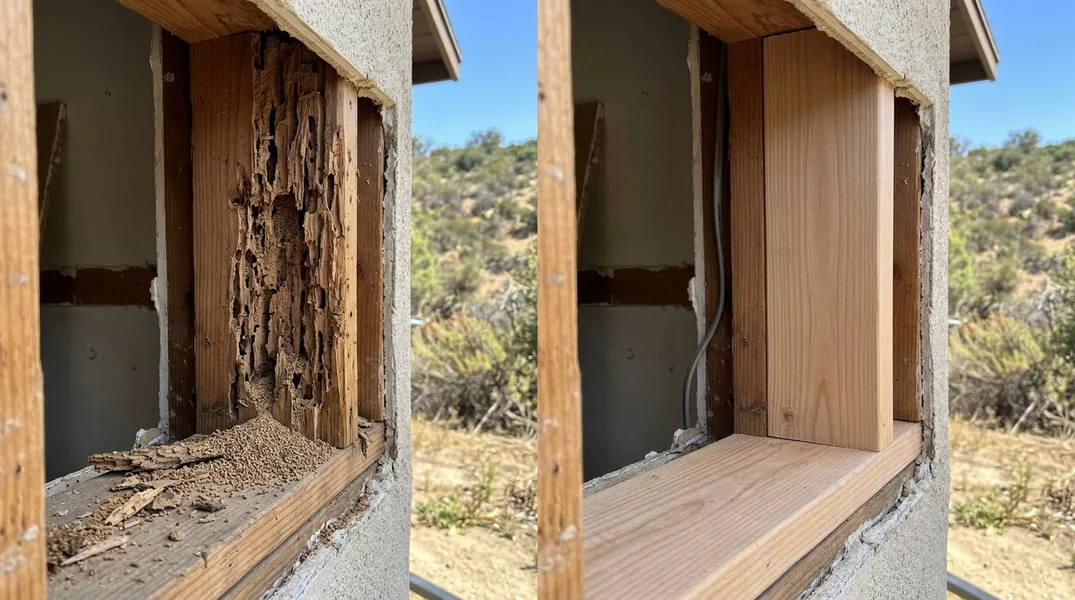
Why San Diego's Climate Is Perfect for Drywood Termites
San Diego homeowners face a unique pest challenge that many other parts of the country simply don't experience to the same degree. The region's mild winters, low humidity, and warm year-round temperatures create an ideal breeding ground for drywood termites. Unlike their subterranean cousins, drywood termites don't need soil contact or moisture sources to survive. They thrive in the dry wood of your home's framing, beams, and structural components, making San Diego properties particularly vulnerable.
The problem becomes even more serious when you consider that drywood termites can remain hidden for years, silently consuming the structural integrity of your home. A single termite colony can contain hundreds of thousands of insects, all working to break down cellulose in your wood. Because they don't require the moisture that subterranean termites need, they can establish colonies in attics, wall cavities, and other dry areas where traditional pest control methods may be less effective. This is why many homeowners in the region discover termite damage only after it has become extensive and costly to repair.
Signs of Termite Damage Every San Diego Homeowner Should Know
Understanding the signs of termite damage is your first line of defense against structural failure. Early detection can mean the difference between a minor repair and a major renovation. The most obvious indicator is the presence of frass, which is termite droppings that look like fine sawdust or sand. You may notice small piles of this material near baseboards, in closets, or beneath wooden structures. Another telltale sign is the appearance of swarmers, which are winged termites that emerge during certain times of year to establish new colonies. If you see these insects, especially during spring or early summer, it's time to act immediately.
Beyond visible droppings and swarmers, there are more subtle warning signs that require attention. Listen for clicking or rustling sounds within your walls, particularly at night. Drywood termites make noise as they tunnel through wood, and a quiet home can amplify these sounds. You may also notice wood that sounds hollow when tapped, paint that blisters or bubbles for no apparent reason, or wood that appears slightly discolored or blistered on the surface. Doors and windows that suddenly stick or won't close properly can indicate structural warping caused by termite tunneling. If you spot any of these warning signs, contacting a professional for an inspection is essential before the damage spreads further.
How Drywood Termite Damage Affects Your Home's Structure
Drywood termite damage doesn't just affect the appearance of your wood. It fundamentally compromises the load-bearing capacity of your home's structural elements. Termites tunnel through wood in a way that leaves thin shells of wood on the surface while hollowing out the interior. This means a beam that looks solid from the outside may be 80 percent consumed from within. Over time, this damage can lead to sagging floors, cracked drywall, and in severe cases, partial structural collapse. The longer the infestation goes undetected, the more expensive the repairs become.
The most vulnerable areas in a typical San Diego home include floor joists, roof trusses, wall studs, and wooden beams. If termites reach your Floor Joist & Subfloor Repair areas, you may experience bouncy or spongy floors that feel unsafe to walk on. Damage to roof structures can lead to leaks and further moisture problems that attract even more pests. The cascading nature of termite damage means that what starts as a localized infestation in one area can eventually spread throughout your entire home if left untreated. This is why professional Termite Damage Repair is so important.
Termite Repair Cost in San Diego: What to Budget
The cost of repairing termite damage varies widely depending on the extent of the infestation and which structural components have been affected. A minor infestation caught early might cost between 1,500 and 3,500 dollars to treat and repair. However, if termites have compromised major structural elements like beams or floor joists, you could be looking at repairs ranging from 5,000 to 15,000 dollars or more. The best way to understand your specific situation is to request a free estimate from a qualified contractor who can assess the damage thoroughly.
When considering pricing for termite damage repair, remember that the cost of prevention is always lower than the cost of remediation. A professional pest control treatment to eliminate the colony typically costs between 1,000 and 2,500 dollars, while structural repairs add to that total. Some repairs may require Beam Replacement & Load-Bearing Wall Removal services, which significantly increase the project cost. Rather than delaying repairs, addressing the problem promptly prevents exponential cost increases. San Diego Carpentry can provide you with accurate pricing for your specific situation when you call us at (619) 815-5154.
Professional Termite Damage Repair Near Me: When to Call a Pro
While some homeowners attempt DIY solutions for minor wood damage, termite infestations require professional intervention. A pest control company will eliminate the living termites, but the structural repairs that follow need skilled carpentry work. This is where San Diego Carpentry comes in. Our team specializes in identifying and repairing the damage left behind by termite colonies, ensuring your home's structural integrity is fully restored. We don't just patch visible damage; we assess the entire affected area and develop a comprehensive repair plan.
Professional contractors have the tools, experience, and knowledge to determine whether wood can be reinforced or must be completely replaced. They understand load-bearing requirements, local building codes, and the best materials for long-term durability. If you've discovered termite damage in your home, contact San Diego Carpentry today at (619) 815-5154 to schedule an inspection and receive a free estimate. Our team will help you understand the scope of the problem and the best path forward for protecting your investment.
Prevention and Next Steps for San Diego Homeowners
The best approach to termite damage is prevention. Regular inspections, typically recommended annually, can catch infestations before they become severe. Keep wood mulch and debris away from your home's foundation, maintain proper ventilation in crawl spaces, and address any moisture problems immediately. Reducing humidity levels inside your home makes it less attractive to pests and helps preserve your wood structures. If you live in an older home or have never had a professional termite inspection, scheduling one now is a smart investment in your property's future.
If you've already discovered termite damage, don't delay in seeking professional help. The combination of pest control treatment and structural repair is essential for a complete solution. San Diego Carpentry offers comprehensive Wood Rot & Dry Rot Repair services alongside termite damage restoration, ensuring all aspects of your home's structural health are addressed. Whether you need a simple inspection, damage assessment, or full structural repair, our experienced team is ready to help. Call (619) 815-5154 today or visit our website to learn more about how we can protect your home from termite damage.
Looking for a professional carpentry contractor in San Diego? San Diego Carpentry responds fast for all your carpentry needs.
Get a Free QuoteOur services: Wood Rot & Dry Rot Repair · Termite Damage Repair · Floor Joist & Subfloor Repair