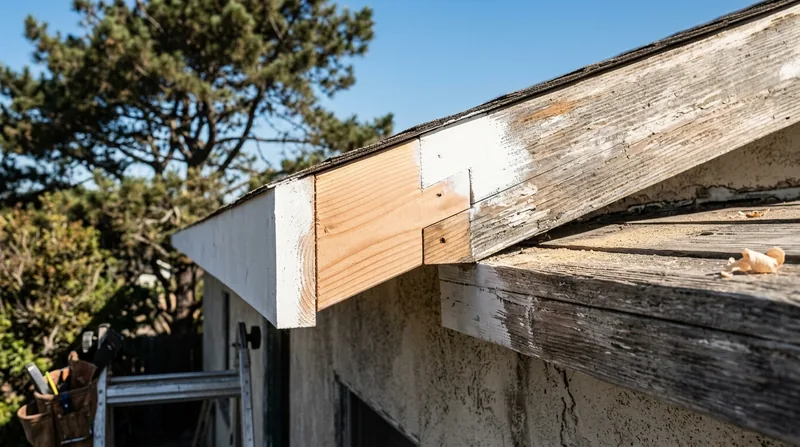




Wood rot and dry rot repair in San Diego is essential for homeowners in our Mediterranean climate, where mild winters and coastal marine-layer fog create ideal conditions for wood decay year-round. San Diego's mix of Spanish Colonial Revival homes in Kensington and North Park, mid-century moderns in Clairemont, and oceanfront bungalows in Pacific Beach and La Jolla all share a common vulnerability: wood-frame structures exposed to moisture, fog, and the relentless pressure of drywood termites that never die off in our nearly frost-free climate. Cracking stucco on older homes often hides advanced decay underneath until the damage becomes structural. We cut out decayed framing, siding and trim, treat surrounding wood, and rebuild with rot-resistant lumber, a permanent repair, not a cosmetic patch. Whether it's a sill plate that's soft to the touch, a rim joist showing black staining, or floor joists that sag under normal load, we diagnose the problem plainly and propose repair before replacement whenever the wood justifies it.
Why Wood Rot and Dry Rot Repair Matters in San Diego Homes
San Diego's climate accelerates wood decay in ways that inland or colder markets never experience. The combination of marine-layer moisture in coastal neighborhoods, dry chaparral heat inland, and year-round termite activity means wood damage can progress from minor to structural in 18 to 24 months if left unaddressed. Stucco-over-wood framing, common in Spanish Colonial Revival homes across Kensington, Mission Hills, and North Park, is particularly vulnerable because cracking in the exterior finish allows moisture to penetrate the framing behind it. A soft sill plate or rotted floor joist doesn't just affect one board; it compromises the load path of an entire section of the home.
- Rotted framing reduces the structural capacity of walls, floors, and roof systems over time.
- Decayed sill plates and rim joists allow settlement and can lead to sagging floors and cracked drywall.
- Moisture trapped in wood creates conditions for both fungal decay and continued termite activity.
- Early intervention stops decay from spreading to adjacent studs, beams, and subfloor.
Addressing wood rot promptly prevents the need for expensive structural replacement later. The San Diego Building and Safety Division requires permits for structural repairs, and we work within those requirements to ensure your home meets current code standards. For detailed information on permit requirements for structural carpentry work, consult the City of San Diego Development Services.
Key info: Drywood termites in San Diego establish colonies year-round with no winter die-off. A termite inspection report from a licensed pest inspector guides our repair scope. We remove and replace damaged wood; pest treatment is a separate licensed trade and not part of our carpentry work.
How We Repair Wood Rot and Dry Rot in San Diego
Our process starts with a careful inspection to identify the full extent of decay and the source of moisture. We use a moisture meter and a sharp tool to probe suspect areas and distinguish surface staining from actual rot. Once we understand the scope, we remove all decayed wood back to sound material, treat exposed framing with a protective finish, and rebuild with pressure-treated lumber or naturally rot-resistant species like redwood, depending on the location and moisture exposure. For termite damage repair, we work from your pest inspector's report to target the exact areas that need replacement.
- We inspect the wood using moisture readings and physical probing to confirm the depth and extent of decay.
- We remove all rotted material and a margin of sound wood to prevent decay from continuing at the cut edge.
- We treat exposed framing with a wood preservative to protect against future moisture intrusion.
- We install new lumber, sistering joists when needed, and fasten all connections to current building code standards.
- We test the repair by checking for proper fastening, level floors, and no soft spots in the new wood.
A typical floor joist repair in a 1970s ranch home in Clairemont or a sill plate replacement under a Craftsman bungalow in South Park takes 2 to 4 days depending on access and the number of joists affected. Structural repairs of this scale commonly require a permit from the local building department.
Example: A homeowner in Ocean Beach noticed soft spots on the rim joist and a slight sag in the kitchen floor. We found dry rot in three floor joists and the rim joist itself. We sistered new joists alongside the damaged ones, replaced the rim joist section, and treated the framing with a wood preservative. The floor was level again, and the soft spots were gone. Total time: 3 days. A permit from the City of San Diego was required and obtained before we started.
Methods for Wood Rot and Dry Rot Repair
| Approach | Description | Best for |
|---|---|---|
| Localized removal and replacement | Cut out decayed section, treat edges, install new pressure-treated or rot-resistant lumber. | Rot confined to one joist, sill plate section, or trim board. |
| Sistering | Install a new joist or beam alongside a damaged one, fastened at 16 inches on center, distributing load between the old and new member. | Structural joists or beams where removal is difficult or where load capacity must be restored immediately. |
| Full member replacement | Remove the entire damaged beam, joist, or stud and install a new one, properly sized and fastened. | Extensive decay affecting load-bearing capacity or where access allows safe removal. |
| Exterior trim and fascia repair | Remove rotted fascia, soffit, or trim boards and replace with pressure-treated or composite material. | Exposed wood trim on eaves, siding, or deck edges where moisture entry is the primary driver. |
Wood Rot and Dry Rot Repair Cost in San Diego: What to Expect
Wood rot repair in San Diego typically starts at $650 for a small, localized repair like a single rotted trim board or a short section of sill plate. The cost rises quickly with scope: a full floor joist replacement, a sistering project affecting three or more joists, or a large section of rim joist will run $1,800 to $3,500 depending on access and the extent of surrounding decay. Factors that move the price include the number of members affected, whether the work is in a crawlspace or accessible attic, the species and size of lumber required, and whether a load-bearing wall or beam is involved.
Load-bearing structural repairs commonly require a licensed structural engineer to size beams or determine the correct sistering method, and a permit from the San Diego Building and Safety Division. We can coordinate with engineers and the permit process, but the engineering cost is separate. Always get 2 to 3 estimates from carpenters who will visit the site, probe the wood themselves, and explain what they find. Estimates based on photos or phone descriptions are not reliable for wood rot work.
For detailed pricing guidance and to understand the specific factors driving your repair cost, visit our pricing page or call us at (619) 815-5154 for a free, no-obligation estimate. We respond within 24 hours and can often schedule an inspection within 2 to 3 business days.
Wood Rot and Dry Rot Repair Near Me: What San Diego Homeowners Should Know When Hiring
Finding a carpenter you can trust for structural wood rot repair starts with verifying that they are fully insured and can provide references from recent jobs in San Diego. Ask whether the same carpenter who inspects the damage will perform the repair; continuity of knowledge matters for quality work. Request references from homeowners in similar neighborhoods, like Kensington, North Park, or Pacific Beach, where you can see how the repair has held up. Check whether the carpenter understands San Diego's permit requirements for structural work and is willing to coordinate with the building department.
If your home is in an HOA community like Rancho Bernardo or Carmel Valley, ask whether any architectural review is required before repair begins. Some associations require approval for exterior work or structural alterations. If the damage is near a protected tree or heritage specimen, check with the City of San Diego Parks and Recreation Department before cutting or removing any wood near the root zone.
Don't confuse wood rot repair with pest treatment. A carpenter removes and replaces rotted wood; a licensed pest control operator treats termite infestations. You need both if termites are active, but they are separate trades. When you contact us for an estimate, we can explain the scope of carpentry work and help you coordinate with a pest inspector if needed. We serve San Diego, Chula Vista, El Cajon, Oceanside, Escondido, and the surrounding communities.
Wood Rot & Dry Rot Repair in San Diego: Pricing Guide
| Service | Price | Details |
|---|---|---|
| Small localized repair | Starting at $650 | Single rotted trim board, short sill plate section, or isolated fascia repair with straightforward access |
| Single floor joist or rim joist repair | Starting at $1,400 | One joist replacement or sistering, includes removal of decayed wood, treatment, and new lumber installation |
| Multi-joist repair or load-bearing work | Starting at $2,200 | Three or more joists, large sill plate sections, or work requiring structural engineer input and building permit |
| Extensive structural replacement | On estimate | Full beam replacement, multiple structural members, or complex moisture source remediation require on-site inspection |
| Travel | Included | No separate charge for service calls within San Diego and surrounding areas |
| Free estimate | No obligation | Response within 24 hours at (619) 815-5154, includes site inspection and written scope of work |
Indicative pricing, the exact cost depends on square footage, finish, and site access. Free personalized estimate within 24h at (619) 815-5154.


