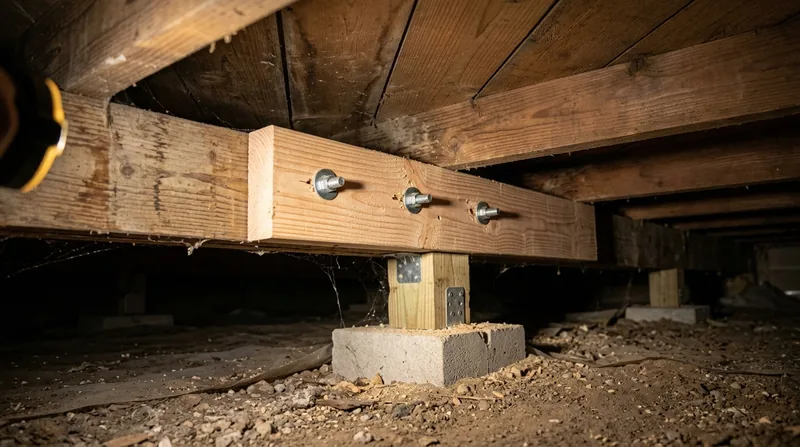




Floor joist and subfloor repair in San Diego addresses one of the most common structural problems in older homes across the region. From the Spanish Colonial Revival and Mission-style stucco-over-wood-frame homes in Kensington and North Park to the craftsman bungalows in South Park and the oceanfront properties in La Jolla and Pacific Beach, San Diego's residential stock relies heavily on wood framing that sits close to the ground. In this mild Mediterranean climate with minimal winter freeze-thaw cycles, wood rot and dry rot develop steadily year-round, especially where moisture from coastal fog, poor drainage, or termite damage compromises the subfloor and floor joists. Sagging, bouncy, or soft floors are the homeowner's first sign that the structural wood underneath has weakened. We sister or replace damaged joists, rebuild subfloor sections, and level floors before finishes go back down. Our work is concrete, straightforward, and grounded in the actual pathology of your home.
Why Floor Joist and Subfloor Damage Accelerates in San Diego's Climate
San Diego's year-round mild temperatures and coastal moisture create ideal conditions for wood decay. Unlike northern climates where winter cold halts fungal growth, San Diego's nearly frost-free environment allows dry rot and wood-eating insects to work continuously. Older homes built on shallow foundations or with poor underfloor ventilation trap moisture against the rim joist and sill plate, the exact locations where rot begins. When termites or moisture damage the structural wood, the floor above loses its support, and the problem compounds quickly. Early detection and repair stop the decay before it spreads into the rim joist, band board, or the framing members that tie the house together.
- Sagging or bouncy floors indicate compromised floor joists or subfloor decking that need immediate assessment.
- Soft spots or areas where the floor feels spongy under foot signal active rot or prior water damage.
- Visible cracks in drywall or plaster above the damaged floor often follow the joist pattern and hint at structural movement.
- Doors and windows that stick or don't close squarely can reflect floor sag that has thrown the frame out of plumb.
- A musty smell in the crawlspace or basement suggests moisture and fungal activity in the subfloor assembly.
Catching these signs early makes repair simpler and less expensive than waiting for the damage to spread into the rim joist or load-bearing wall below.
Local example: A 1960s mid-century modern home in Clairemont with a concrete slab garage addition and poor drainage around the perimeter developed rot in the band board and outer joists within five years. The floor sagged noticeably near the exterior wall. We sistered the damaged joists, replaced the rotted band board, and installed a vapor barrier to control future moisture. The floor is now level and the structure is sound.
For more on the wood damage that often accompanies floor joist failure, see our page on wood rot and dry rot repair in San Diego. If your floor damage was caused by termite activity, we can work from your pest inspection report to repair the structural wood; for details on that process, visit our termite damage repair page.
How We Repair Floor Joists and Subfloor in San Diego Homes
Our process begins with a careful inspection of the subfloor, joists, and rim board. We determine whether damage is localized enough to repair by sistering (installing a new joist alongside the damaged one) or whether sections of the joist or subfloor need full replacement. We measure the floor for level and note any sag or deflection. Once we understand the scope, we shore up the floor temporarily, remove the damaged wood, install new framing members, and rebuild the subfloor deck. We then level the floor before your finishes go back down. This approach preserves the structure while avoiding unnecessary replacement.
- We inspect the crawlspace, basement, or underfloor area to identify the extent and location of rot or damage.
- We measure the floor elevation and document any sag, bounce, or deflection in writing and with photographs.
- We determine whether the joists can be sistered (reinforced) or must be replaced outright.
- We install temporary shoring to support the floor above and prevent further movement during the work.
- We remove the damaged joist sections, subfloor decking, or rim board as needed.
- We install new pressure-treated or Douglas fir joists, bolting or nailing them to the existing structure per code.
- We install new subfloor decking (typically 3/4 inch plywood or oriented strand board) and secure it with construction adhesive and fasteners.
- We level the new floor to match the existing floor plane, using shims or adjusting joist placement as needed.
- We remove temporary shoring and inspect the final result for level, solid support, and code compliance.
The result is a solid, level floor that will carry loads safely for decades.
Concrete example: A 1920s craftsman bungalow in South Park had a 2-inch sag in the kitchen floor over a 12-foot span. The outer joists were soft with dry rot, and the subfloor was spongy near the exterior wall. We sistered new joists to the damaged ones, replaced the subfloor over a 16-foot by 10-foot section, and shimmed the joists to bring the floor back to level. The kitchen floor is now solid and flat, and the original finish went back down without gaps or movement.
For larger structural work involving load-bearing walls or multiple-span beam systems, see our page on beam replacement and load-bearing wall work in San Diego.
Repair Methods and When to Use Each
| Approach | Description | Best For |
|---|---|---|
| Sistering | Installing a new joist alongside the damaged one and bolting or nailing them together to act as a single unit. | Localized rot in one or two joists where the majority of the joist is still sound and can carry shear loads. |
| Full Joist Replacement | Removing the entire damaged joist and installing a new one cut to length and secured to the rim board and rim joist. | Widespread rot or structural failure affecting the entire joist or a critical bearing point. |
| Subfloor Patching | Cutting out and replacing small sections of subfloor decking where rot is confined to the top layer or a few boards. | Water damage or rot that has not penetrated the joists below or affected more than a few square feet. |
| Rim Board and Band Board Replacement | Removing and replacing the outer rim joist or band board where it interfaces with the sill plate and foundation. | Rot at the perimeter of the house where moisture and termites have compromised the connection to the foundation. |
| Leveling and Shimming | Using shims, blocking, or joist hangers to adjust the height of the floor plane so it is level and matches existing finishes. | Any repair where the new joists or subfloor must integrate with existing flooring without creating lips or high spots. |
The choice of method depends on the extent of damage, the location and accessibility of the joists, and whether the floor sag needs to be corrected or the sag is acceptable to leave in place.
Floor Joist and Subfloor Repair Cost in San Diego: What to Expect
Floor joist and subfloor repair in San Diego typically starts at $1,800 for a small, localized repair, such as sistering one or two joists or patching a confined section of subfloor. Most residential jobs in the $2,500 to $6,000 range involve multiple joists, a larger subfloor section, or work that requires significant temporary shoring or access challenges. Cost is driven by the number of joists affected, the length of the joists, whether the rim board or band board must be replaced, the accessibility of the crawlspace or underfloor area, and the need to level the floor afterward. San Diego's older neighborhoods, from the 1920s bungalows to the 1960s mid-century homes, often have shallow crawlspaces or concrete slabs that make access difficult and add labor time.
The best way to understand your repair cost is to have us inspect the damage and provide a written estimate. We can explain whether repair by sistering will solve the problem or whether replacement is the honest answer. For a full pricing overview and examples of other carpentry services, visit our pricing page.
Factors that increase cost include:
- Multiple joists or a span longer than 12 feet requires more material and labor.
- Poor crawlspace access (low headroom, debris, or a concrete slab) slows work and requires more temporary shoring.
- Damage that extends into the rim joist or sill plate adds complexity and may require structural engineering input.
- Leveling the floor after repair, especially over a large area, requires precise shimming and may involve adjusting multiple joists.
- Permits, if required by the local building department, add inspection time and administrative cost.
We recommend getting 2 to 3 estimates so you can compare scope, approach, and price. A low estimate that glosses over the actual damage is often a sign that the inspector did not look carefully enough.
Floor Joist and Subfloor Repair Near Me: What San Diego Homeowners Should Know When Hiring
When you are ready to hire a carpenter for floor joist and subfloor repair, start by understanding what you are paying for. A reputable contractor will visit your home, inspect the damage in person, document the problem with photos, and explain the repair approach before quoting a price. Ask whether the estimate includes leveling the floor, temporary shoring, and disposal of the old wood. Verify that the contractor is fully insured and carries general liability and workers compensation coverage. Ask for references from recent jobs in San Diego, and call them to ask whether the work was done on time, whether the floor is level and solid, and whether the contractor cleaned up afterward.
In San Diego, the City of San Diego Development Services office issues permits for structural work such as joist replacement or subfloor repair. Thresholds and requirements vary by neighborhood and by the scope of the work. A contractor who is familiar with San Diego's building code and the permit process will save you time and ensure the work passes inspection.
If you live in a homeowners association or a historic district, check your CC&Rs or HOA rules to see whether floor repair requires approval before work begins. In some coastal neighborhoods like Coronado or Solana Beach, the city may have additional requirements for homes near the waterline or in flood-prone areas.
Call us at (619) 815-5154 for a free, no-obligation estimate. We will visit your home, inspect the damage, and explain what needs to happen next. We serve San Diego and the surrounding communities, and we stand behind every repair we complete.
Floor Joist & Subfloor Repair in San Diego: Pricing Guide
| Service | Price | Details |
|---|---|---|
| Single joist sistering or small subfloor patch | Starting at $1,800 | Localized rot in one or two joists or confined subfloor damage; includes shoring, removal, new joist or decking, and basic leveling |
| Multi-joist repair or rim board replacement | Starting at $3,500 | Three to six joists, rim board damage, or subfloor section larger than 100 square feet; includes temporary support and floor leveling |
| Full floor system repair or extensive structural damage | On estimate | Damage affecting multiple joists, the rim joist, sill plate, or requiring structural engineering input; scope requires on-site inspection |
| Permit and inspection coordination | Included in estimate | We manage communication with the San Diego building department and arrange inspections as required by local code |
| Travel and mobilization | Included | No separate travel fee for San Diego, Chula Vista, El Cajon, Oceanside, Escondido, Carlsbad, San Marcos, Vista, and surrounding areas |
| Free estimate | No charge | In-person inspection, written estimate with detailed scope, no obligation to hire; response within 24 hours at (619) 815-5154 |
Indicative pricing, the exact cost depends on square footage, finish, and site access. Free personalized estimate within 24h at (619) 815-5154.


