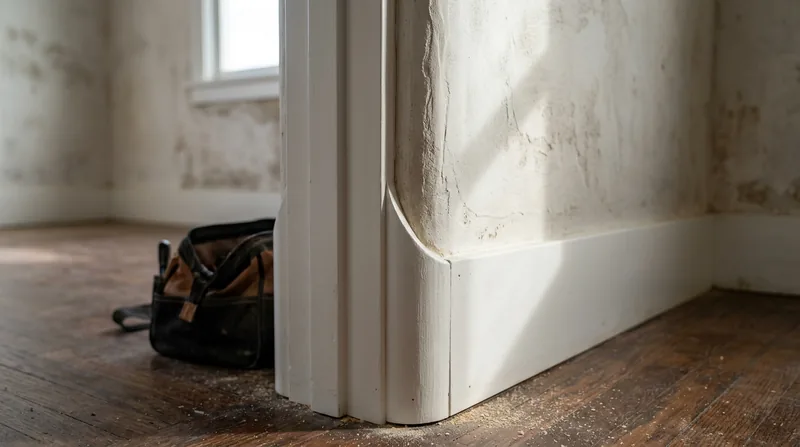




Finish & Trim Carpentry in San Diego demands precision, patience, and a working knowledge of how wood moves and wears in a Mediterranean climate. San Diego's residential stock spans Spanish Colonial Revival homes in Kensington and North Park, mid-century modern cottages in Clairemont and Talmadge, and newer stucco tract homes across Rancho Bernardo and Carmel Valley. Whether you're installing crown molding in a 1920s bungalow in South Park, casing doorways in a La Jolla oceanfront home, or fitting custom wainscoting in a Coronado living room, the work separates genuine finish carpentry from handyman-level trim. Tight miters, scribed fits, and consistent reveals take skill, time, and the right tools. The dry San Diego climate and year-round stable conditions are forgiving compared to seasonal swing regions, but they demand accuracy because gaps and misalignment show immediately in bright coastal light.
Why Finish & Trim Carpentry Matters in San Diego Homes
Finish carpentry is where a house becomes a home. It frames doorways, defines room proportions, and protects wall joints and transitions. In San Diego's mix of older wood-frame homes and newer stucco-over-frame construction, proper trim installation also serves a functional role: it covers gaps between framing and drywall, transitions between different materials, and conceals the seams that would otherwise telegraph settling or seasonal movement. Poor trim work looks cheap and allows dust and moisture infiltration; good trim work is invisible because it fits so well.
- Crown molding establishes visual weight and proportions in rooms with high or vaulted ceilings, common in older San Diego Craftsman and Spanish Colonial homes.
- Baseboard and casing protect wall bases and door frames from kicks and moisture, and anchor the eye at room edges.
- Custom built-ins, wainscoting, and paneling add character and storage while covering wall imperfections or outdated surfaces.
- Interior door casings and jambs must fit squarely and plumb so doors close smoothly and hardware aligns properly.
- Exterior fascia, soffit, and trim protect the framing from weather and define the roofline, critical in San Diego where eucalyptus trees shed bark and debris onto eaves year-round.
Each of these elements requires layout, material selection, precise cutting, and installation technique that separates a finish carpenter from a general handyman.
Key info: San Diego's mild, dry climate means wood finishes and stain hold color longer than in humid regions, but it also means gaps and misalignment are visible for decades. Precision in finish carpentry pays off in appearance and durability. The San Diego Building Department requires permits for structural work such as removing walls or altering framing, but finish trim typically does not require a permit unless it involves electrical or plumbing integration.
How We Approach Finish & Trim Carpentry in San Diego
Real finish carpentry starts with measurement and layout. We visit the site, assess the walls and openings for plumb and level, identify the grain direction and color variation in trim stock, and plan cuts and joints to minimize waste and maximize visual flow. We work from the highest-visibility areas first, scribing and fitting as we go rather than assuming square walls or standard dimensions. In San Diego's older homes, walls often settle or bow slightly over decades, so we fit trim to the actual wall, not to theory.
- Measure the room, walls, and openings for plumb, level, and square; identify any settlement or bowing.
- Select trim stock and assess grain, color, and knots to minimize visual defects in high-sight areas.
- Cut and fit the first piece (often a corner or opening) and scribe or sand for a tight fit against the actual wall.
- Cut remaining pieces, working from a consistent baseline and using coped joints at inside corners for a seamless finish.
- Install with finish nails or pocket screws, setting nail heads and filling holes with putty that matches the stain.
- Sand, stain, and finish (or prime and paint) after installation, so hardware and final details are clean and crisp.
This process takes longer than nailing on stock trim straight, but the result is a fit that looks built-in and lasts without gaps or movement.
Local example: A Mission Hills Craftsman home with original 4-inch baseboards and 2.5-inch door casings had walls that bowed nearly 0.5 inches over 90 years. Rather than force new stock trim to follow the bow (creating visible gaps at the top), we scribed the back edge of the baseboard and casing to match the wall profile, resulting in a tight, seamless fit that looked original.
For related structural work such as framing and structural carpentry, we handle the rough opening and wall modifications before trim installation begins.
Finish & Trim Methods and Materials
| Approach | Description | Best for |
|---|---|---|
| Stock trim, straight installation | Standard milled profiles nailed directly to walls; faster, lower cost. | New construction, remodels with square walls, budget-conscious work. |
| Scribed and fitted trim | Trim back-cut or sanded to match wall contours; takes more time but creates seamless fit. | Older homes with settled or bowed walls; high-visibility areas; homes where precision is valued. |
| Custom milled or solid wood trim | Trim milled to match original profiles or designed custom; premium materials like redwood or Douglas fir. | Historic restoration, high-end finish work, matching original millwork in Spanish Colonial or Craftsman homes. |
| Coped joinery at inside corners | Trim ends are shaped to fit the profile of the adjacent piece rather than mitered; more forgiving of wall movement. | Crown molding, baseboard, and decorative trim where seasonal movement or wall settling is a concern. |
| Built-in cabinetry and shelving | Custom-designed and installed shelving, bench seating, or storage; integrated into wall framing. | Adding storage and character; filling alcoves or wall bays; creating display or functional shelving. |
Finish & Trim Carpentry Cost in San Diego: What to Expect
Finish carpentry pricing depends on the scope, material, and fit complexity. A straightforward baseboard or door casing installation in a new or square-walled home costs less than scribed and fitted trim in an older, settled home. Crown molding in a large room with multiple corners runs higher than a simple straight hallway. Material choices also matter: stock pine trim costs less than custom milled redwood or Douglas fir, and painted finishes cost less than stained and sealed work.
Most finish carpentry jobs in San Diego start at $550 to $1,200 for a single room (e.g., one doorway with casing, or a straightforward baseboard run). Larger projects such as crown molding throughout a home, custom wainscoting, or built-in shelving typically range from $2,000 to $6,000 or more, depending on linear footage, material, and fit complexity. Historic restoration or custom milling work may exceed these ranges. The best way to understand cost is to review our pricing overview and request a free, no-obligation estimate so we can assess your specific walls, materials, and finish requirements.
Factors that affect the final cost include room size and linear footage of trim, whether walls are square and plumb or require scribing and fitting, material choice (stock vs. custom milled), finish type (paint vs. stain), and the number of inside and outside corners. We provide detailed estimates that break down material and labor, so you understand what you're paying for.
Finish & Trim Carpentry Near Me: What San Diego Homeowners Should Know
When you're ready to hire a finish carpenter in San Diego, look for a craftsperson or small shop with a portfolio of completed work and references from past clients. Ask to see photos of fit and finish in homes similar to yours. A good finish carpenter will visit your home, measure carefully, discuss material and finish options, and explain the timeline and cost before starting work. They should be fully insured and able to document their work with photos and a clear contract.
Check references from recent San Diego clients, especially if you're matching original trim in an older home such as a Craftsman or Spanish Colonial. Ask how the carpenter handles walls that aren't square and how they approach scribed vs. mitered joints. If your project involves removing or altering a wall or adding structural shelving, verify that the carpenter coordinates with a licensed structural engineer and obtains the necessary permit from the San Diego Building Department. Some neighborhoods and HOAs in areas like Coronado, Solana Beach, and Del Mar have design review or heritage preservation requirements, so ask your carpenter about local rules before starting.
We welcome a conversation about your trim and finish needs. Contact us for a free estimate at (619) 815-5154, and we'll visit your home, assess the scope, and provide a detailed quote with no obligation.
Finish & Trim Carpentry in San Diego: Pricing Guide
| Service | Price | Details |
|---|---|---|
| Single doorway with casing | Starting at $550 | Door opening measurement, casing cut and fit, installation, and finish; cost increases if walls require scribing or custom milling |
| Baseboard or crown molding (per linear foot) | Starting at $18-35 per foot | Material and labor; cost varies by profile complexity, wall fit, and finish (paint vs. stain); inside corners cost more due to coping |
| Custom wainscoting or paneling (per square foot) | Starting at $45-80 per sq ft | Includes material, layout, installation, and finish; higher cost for scripted fit in older homes or historic restoration work |
| Built-in shelving or cabinetry (per linear foot) | Starting at $150-400 per linear foot | Design, custom milling, installation, and finish; cost depends on depth, adjustability, and whether shelving is open or enclosed |
| Estimate | Free | On-site visit, measurement, and detailed quote provided within 24 hours; no obligation to book work |
Indicative pricing, the exact cost depends on square footage, finish, and site access. Free personalized estimate within 24h at (619) 815-5154.


