Why Is My Floor Sagging? Common Causes in Older San Diego Homes
If you own an older home in San Diego, you may have noticed your floors aren't quite level anymore. That subtle slope or dip isn't just annoying to walk on, it's a warning sign that something structural needs attention. Sagging floors are one of the most common issues we encounter in homes built several decades ago, and understanding what causes them is the first step toward fixing the problem.
The primary culprit behind sagging floors is damage to the floor joists, the horizontal wooden beams that support your flooring system. In San Diego's older homes, these joists are often made of solid wood that can deteriorate over time. Wood Rot & Dry Rot Repair is one of the leading causes of joist failure. When wood becomes exposed to moisture, fungal decay eats away at the structural integrity of the timber, reducing its load-bearing capacity. Even a small section of rotted wood can compromise an entire joist, causing the floor above to sag as the weakened beam can no longer support the weight it once did.
Termite Damage Repair is another significant factor, particularly in coastal and older neighborhoods. Termites tunnel through wooden joists, creating hollow galleries that weaken the structural strength of the wood. Unlike rot, which you might notice through discoloration or soft spots, termite damage can be hidden inside the wood, making it harder to detect until the floor begins to sag noticeably.
How Floor Joists Fail and What That Means for Your Home
Floor joists are engineered to carry specific loads over certain spans. When they're healthy, they distribute your home's weight evenly to the foundation and support beams below. But when joists weaken from rot, termite damage, or moisture exposure, they lose their ability to carry that load. The result is deflection, which homeowners experience as a noticeable dip or bounce in the floor. In severe cases, you might notice doors that won't close properly, cracks in drywall, or even gaps between walls and floors.
The failure process is typically gradual. Many homeowners don't realize there's a problem until the sagging becomes obvious. By that point, the underlying damage may be more extensive than if it had been caught earlier. This is why regular inspections of your crawl space or basement, especially in homes over 40 or 50 years old, are so important. If you suspect joist damage, don't delay getting a professional assessment, as the problem only gets worse with time.
Sagging Floor Repair Options: Sistering Floor Joists and Other Solutions
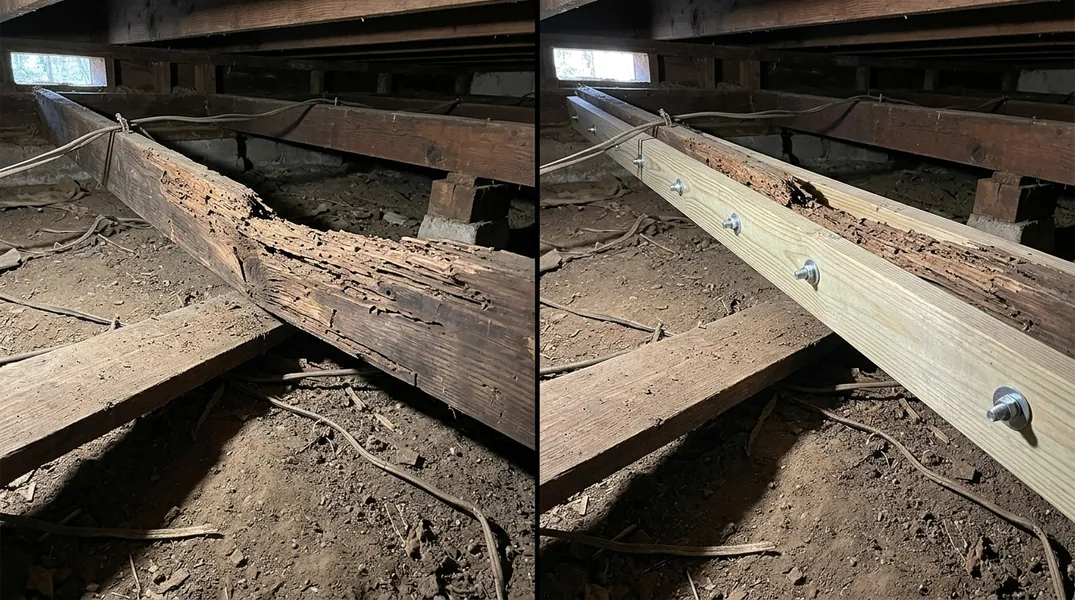
Floor Joist & Subfloor Repair comes in several forms, depending on the extent of the damage and the structural requirements of your home. The most common repair method for moderately damaged joists is called sistering, a process where a new, healthy piece of lumber is bolted alongside the damaged joist to restore load-bearing capacity. This technique is cost-effective for joists that are still structurally sound in most areas but have isolated sections of rot or damage.
Sistering floor joists involves carefully measuring the damaged section, cutting a sister board to match the original joist dimensions, and then fastening it securely with bolts or lag screws spaced at regular intervals. The sister board carries the load alongside the original joist, effectively doubling the structural support in that area. This approach works well when the damage is limited and the joist still has enough integrity to be saved. However, if the joist is severely compromised or the damage is extensive, full joist replacement may be necessary.
In some cases, particularly with older homes where the original joists are undersized by modern standards or where damage is widespread, Beam Replacement & Load-Bearing Wall Removal work may be required. This is a more involved project that might include installing a new support beam or adding additional posts to redistribute the load. The specific solution depends on your home's layout, the extent of the damage, and local building codes.
Floor Joist Repair Cost in San Diego: What to Budget
The cost of sagging floor repair varies widely depending on how much damage exists, how many joists need work, and which repair method is appropriate. A simple sistering repair for one or two joists might cost between $1,500 and $4,000, while more extensive work involving multiple joists or full joist replacement can easily exceed $10,000 or more. The best way to understand what you're facing is to get a free estimate from a qualified contractor who can assess the actual condition of your joists.
Several factors influence the final pricing. The accessibility of the joists matters significantly, as crawl spaces that are tight, wet, or cluttered require more time and labor. The number of joists involved and the length of the damaged sections also affect cost. Additionally, if the underlying cause of the damage, such as a moisture problem or pest infestation, needs to be addressed, that adds to the total project cost. Many homeowners find that addressing the root cause, such as improving drainage or treating a termite infestation, actually saves money in the long run by preventing future damage.
Don't let the potential cost discourage you from getting repairs done. Ignoring sagging floors can lead to much more expensive structural problems down the road. Continued deflection can damage other building components, including walls, plumbing, and electrical systems. If you're a homeowner in the area and concerned about sagging floors, call San Diego Carpentry at (619) 815-5154 to discuss your situation and get an honest assessment of what's needed.
Identifying the Root Cause: Moisture, Termites, and Age
Before you can fix sagging floors properly, you need to understand why the joists failed in the first place. If you don't address the underlying cause, the problem will likely return. In most cases, moisture is the culprit. Water intrusion from foundation leaks, poor drainage, plumbing issues, or high humidity in crawl spaces creates the perfect environment for wood rot. Once rot takes hold, it spreads rapidly through the wooden structure, weakening joists and other structural members.
Termites and other wood-boring insects are another common cause, especially in older neighborhoods. A professional inspection can identify whether you're dealing with active termites, old termite damage, or dry rot. Each situation requires a different approach. If termites are present, you'll need pest control treatment alongside the structural repairs. If moisture is the issue, you might need improved ventilation, sump pumps, or drainage improvements to prevent future problems.
Age itself doesn't cause sagging, but it makes wood more vulnerable to damage. Joists installed 50 or 60 years ago have been exposed to decades of potential moisture fluctuations, pest activity, and normal settling. Regular inspections help catch problems early, when they're easier and less expensive to fix.
When to Call a Professional Near Me: Don't DIY Structural Repairs
Sagging floors are a structural issue, not a cosmetic one. While there are many home projects homeowners can tackle themselves, joist repair isn't one of them. Floor Joist & Subfloor Repair requires proper engineering calculations, building permits, and inspections to ensure the work meets code and is done safely. Improper repairs can create liability issues and may not actually solve the underlying problem.
A qualified carpenter or structural contractor will assess the damage, determine the best repair method, obtain necessary permits, and ensure the work is inspected by local authorities. In San Diego, building codes are specific about how structural repairs must be performed. Professional contractors understand these requirements and have the experience to handle complications that often arise when opening up old homes. If you've noticed sagging floors or suspect joist damage, the smartest move is to contact San Diego Carpentry at (619) 815-5154 or request a free estimate today. We'll evaluate your specific situation and provide honest recommendations for the best way forward.
Looking for a professional carpentry contractor in San Diego? San Diego Carpentry responds fast for all your carpentry needs.
Get a Free QuoteOur services: Wood Rot & Dry Rot Repair · Termite Damage Repair · Floor Joist & Subfloor Repair