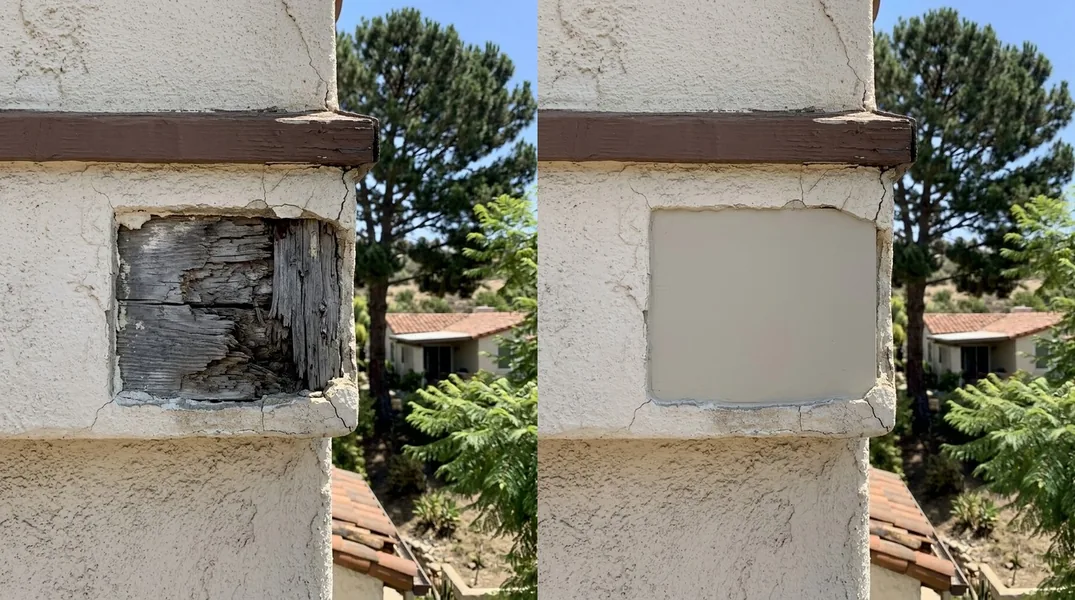
Drywood Termite Damage vs Wood Rot: Why It Matters
If you own a home in San Diego, you've probably heard warnings about both wood rot and termites. The truth is, both can cause serious structural damage to your house, but they work in completely different ways and require different solutions. Confusing one for the other could mean months of wasted time treating the wrong problem while your home continues to deteriorate.
Understanding the difference between drywood termite damage and wood rot is the first step toward protecting your investment. Wood rot is caused by fungal decay that thrives in moisture, while drywood termites are insects that tunnel through wood regardless of moisture content. Misidentifying the culprit means you might spend money on unnecessary treatments or fail to address the real threat. This guide will help you spot the signs of each so you can take action fast.
What Does Termite Damage Look Like?
Drywood termites leave very distinctive damage patterns that differ significantly from wood rot. When termites tunnel through wood, they create galleries or tunnels that follow the grain of the wood. These tunnels are typically smooth and clean, almost like they've been sanded. If you tap on wood that's been damaged by termites, it often sounds hollow because the insects have eaten out the interior while leaving a thin shell on the surface. This is one of the most reliable ways to identify what does termite damage look like in its early stages.
Another telltale sign of signs of termite damage in wood is the presence of frass, which is termite droppings. Drywood termites push their waste out of small holes in the wood, and this frass looks like tiny pellets or sawdust piles. You might find these piles beneath infested wood or near baseboards and window frames. Additionally, you may notice small holes in the wood surface where termites have created exit points. These holes are typically about the size of a pinhead and are often surrounded by frass. Swarmers, or winged termites, may also appear in spring or fall, which is a sign that a mature colony is present in your home.
Identifying Wood Rot and Dry Rot in Your San Diego Home
Wood rot, by contrast, has a very different appearance and progression. When wood begins to rot, it typically becomes soft, spongy, or crumbly to the touch. The wood may also darken in color and develop a musty smell. Unlike the clean tunnels left by termites, wood rot causes the wood to break down in a more diffuse pattern, often affecting larger areas. Dry rot, despite its name, actually requires some moisture to develop, though it can spread to seemingly dry wood. The fungus that causes dry rot creates a distinctive cubical cracking pattern on the surface of the wood, where the grain breaks into small cube-like sections.
Wood Rot & Dry Rot Repair is essential when you notice these signs because the problem will only worsen over time. Unlike termite damage, which is caused by active insects that can be treated with pest control, wood rot requires removing the affected wood and addressing the moisture source. You might also notice paint peeling or bubbling over rotted wood, or see visible fungal growth that looks like white threads or mushroom-like fruiting bodies. The key difference is that termite damage is caused by living insects actively eating the wood, while wood rot is caused by fungal decay that breaks down the wood's structure.
Wood Rot vs Termite Damage: Key Differences at a Glance
To help you quickly identify which problem you're facing, here are the main differences between wood rot vs termite damage. Termite damage creates clean, smooth tunnels that follow the wood grain, while wood rot causes soft, crumbly, or spongy deterioration. Termites leave behind frass (droppings) that resembles fine sawdust, whereas wood rot typically produces a musty odor and may show visible fungal growth. Termite damage often sounds hollow when you tap on it, and you may see small exit holes. Wood rot, on the other hand, feels soft when probed and may have a discolored or darkened appearance.
The moisture factor is also critical. Wood rot requires moisture to develop and spread, so it's often found in areas with water leaks, poor drainage, or high humidity. Drywood termites, as their name suggests, can infest wood with very low moisture content, making them a threat even in drier parts of your home. If you've had recent water damage, leaks, or live in a particularly humid area of San Diego, wood rot may be more likely. However, termites can strike anywhere, anytime, which is why year-round vigilance is important for homeowners.
When to Call a Professional for Drywood Termite Damage or Wood Rot Repair
If you've identified signs of either termite damage or wood rot in your home, it's time to call in the experts. Attempting to treat these problems yourself can be costly and ineffective. For termite damage, you'll need Termite Damage Repair from a qualified carpenter who can assess the extent of the infestation and replace damaged wood. For wood rot, professional Wood Rot & Dry Rot Repair involves not only replacing the rotted wood but also identifying and fixing the moisture source to prevent recurrence.
San Diego Carpentry specializes in both types of damage and can help you determine exactly what you're dealing with. Our team has years of experience identifying and repairing structural damage caused by termites, wood rot, and dry rot. Whether the damage is in your subfloor, floor joists, beams, or walls, we have the expertise to handle it. If structural elements like floor joists or load-bearing beams are affected, you may need Floor Joist & Subfloor Repair or even Beam Replacement & Load-Bearing Wall Removal. The sooner you address the problem, the less extensive and expensive the repairs will be.
Getting Your Free Estimate and Next Steps
The best way to know for certain whether you're dealing with termite damage or wood rot is to have a professional inspection. San Diego Carpentry offers a free estimate so you can understand the scope of the problem and what repair options are available. During the inspection, our team will examine the affected areas, test the wood, and provide you with a clear diagnosis and repair plan.
Don't wait until the damage spreads further. If you suspect termite damage or wood rot in your home, reach out to San Diego Carpentry today at (619) 815-5154 or visit our website to request a free estimate. The sooner you take action, the sooner you can protect your home and your family's safety.
Looking for a professional carpentry contractor in San Diego? San Diego Carpentry responds fast for all your carpentry needs.
Get a Free QuoteOur services: Wood Rot & Dry Rot Repair · Termite Damage Repair · Floor Joist & Subfloor Repair